So if you grew up in an Indian house in the eighties or the nineties, you did not read the Ramayana. You watched it, well, religiously. It was a sunday ritual for my fam and I remember we used to plan our life around the time for the Ramayana to beam. I am told that oldies would even sit on the floor, with their hands folded and look up to Arun Govil as Lord Rama.
My parents are that generation. And somewhere at the back of their heads, Lanka was never a country you could fly to. It was the far end of the story. The place where Sita was held hostage. Where the bridge (Ram Setu) went. Where it all came to a head. And you do not book a ticket to a myth.
Except you can!
It is ninety minutes from India. They call it Sri Lanka now, the myth has an address and a ticket counter and a man outside selling king coconut for two hundred rupees. So i took them there.
This blog is a an honest version of things I wish someone had told me before i went with my parents. Where to go, what to skip, what it costs, how to keep two old people warm, fed and upright across four days of temples in the hills. i have written one long guide like this before, for remote work from Goa. Consider this the pilgrimage cousin.
The problem nobody tells you about the Ramayana trail
Here is the honest bit. The Ramayana trail in Sri Lanka is real, it is well marked, and it is written for the wrong person, almost all of it.
Search it and you get tour operators. Eight nights, eleven nights, a coach, a group of forty, a rock climb at seven in the morning, a temple at nine, another at eleven, lunch on the bus. It reads like a school trip. It is built for legs that do not think about steps.
My parents think about steps now. Not in a sad way. but in a more pragmatic one. How many. How steep. Is there a rail. Is there somewhere to sit at the top, or do we turn and come straight back down through the same crowd.
And this I found is something that not one operator itinerary respects!
For example, after I read websites, the first plan i made had Sigiriya in it. The big rock. Twelve hundred steps, a spiral staircase bolted to a cliff, no lift, sun the whole way up. i had it on day two like it was nothing. Then i pictured my parents on step four hundred, in the heat, a queue behind them and no way down except through it, and i took it off the list.
So this guide has a bias and i want it on the table. It is built for people above the ages of 65. And not for younger folks with go pros and insta accounts.
Why Sri Lanka, and not India, for the Ramayana with old parents

The Ramayana has two halves and two geographies. There is Rama’s half, the India half. Ayodhya, Chitrakoot, the forest years, Nashik, Hampi, down to Rameswaram where the bridge begins. And there is Sita’s half. The captivity. Lanka. That half sits in Sri Lanka, and for old parents it is, without much competition, the softer pilgrimage.
Three reasons, and they all matter more at seventy than at thirty.
One.
it is small. The sites you want sit inside one tidy loop. Colombo, up to Kandy, up again into the hills at Nuwara Eliya, and back. (Here is the loop on the map.) Three or four nights, one car, one driver, one road. You are never more than a few hours from a bed. Compare that to the India circuit, which is a country and a half of trains and a month you do not have.
Two.
it is easy to get into. Indians get an ETA to get into Sri Lanka, the electronic travel thing, and for long stretches it has been free (do not trust me, trust the government portal, because the fee comes and goes with the season). Ninety minutes from most of south India. Your parents are not on a plane long enough to seize up. In my case, the flight was almost 4 hours cos we are in Delhi.
Three.
And this is the one that matters. it is Sita’s half. This is where she was held in the ashok vatika. Where she is said to have bathed in a cold stream. Where she walked through fire to end the argument about her. Where Hanuman came over the water looking for her and, finding her, set about the place. If your parents grew up on the story, this is the emotional half, not the sightseeing half. Rama gets the statues. Sita gets the ground under your feet. For the right Indian parent, standing on that ground does something a photo of a far grander temple never will.
The catch, and there is always a catch, is that Sita’s half sits high up. Most of the good stuff clusters around Nuwara Eliya, an almost a hill station, bangi nthe middle of the country.
Getting there…
Fly into Colombo.
Bandaranaike airport is up the coast, about forty five minutes north of the city.
Now the decision.
How do you move three people, two of them old, around this island for four days. There are three answers and only one of them is right.
Trains.
Beautiful, cheap, world famous, the Kandy to Ella hill line is on every list of great train rides on earth. Also the wrong answer for old parents. The famous stretch is packed, the platforms have steps and gaps, the good photos come from hanging out of a door, and you cannot control when your mother needs a toilet on a three hour ride. Do one short scenic hop if they are up for it, as a treat, not as transport.
Buses.
Lol. No. Next.
A car with a driver for the whole loop.
This is the answer. One price, door to door, four days, one man who knows the roads and where the clean toilets are. We paid about eighty thousand Sri Lankan rupees, about twenty three thousand of ours, for the entire loop with a good driver in a comfortable car. Split across the trip it is nothing, and it is the single best thing you can do for old knees. No station steps. No lifting bags. No standing. The car becomes the moving base camp: the meds live in it, the shawls live in it, the water lives in it. When someone is tired, the car is right there.
Book it through your hotel or a known operator, not a man at the airport. Tell them straight: two senior citizens, we go slow, we stop for toilets, we are not racing to tick a list. A good driver hears that and re-times the whole day around it. Ours did.
One more thing before the sites. Money. Carry some Sri Lankan rupees for temples, tips and coconuts, but cards work easily in hotels and the bigger shops. Keep small notes.
The loop, day by day, the way we ran it
Here is the shape. Move the nights around to taste, but do not compress it. Old people plus altitude plus winding roads means you build in slack, not squeeze it out.
Day 0, land in Colombo.
Arrive, do nothing. If the flight lands you with daylight to spare, the one stop worth making on the way in from the airport is Kelaniya, which sits on that side of the city. Otherwise, hotel, dinner, early night. Colombo is warm and flat and a kind place to start.
Day 1, Colombo to Kandy.
Three, four hours on the road, on a slow climb inland. Break it. Reach Kandy by afternoon, see the lake, and if there is an evening cultural show with the drums and the fire dancers, go, because it is seated, indoors, forty five minutes, and the pace old people enjoy. We paid 3500 LKR per head for it and it was worth every one.
If they are up for one more, the Temple of the Tooth Relic by the lake is Kandy’s big one, flat and grand and used to old pilgrims, though it draws a crowd, so go early or late.
Day 2, Kandy up to Nuwara Eliya.
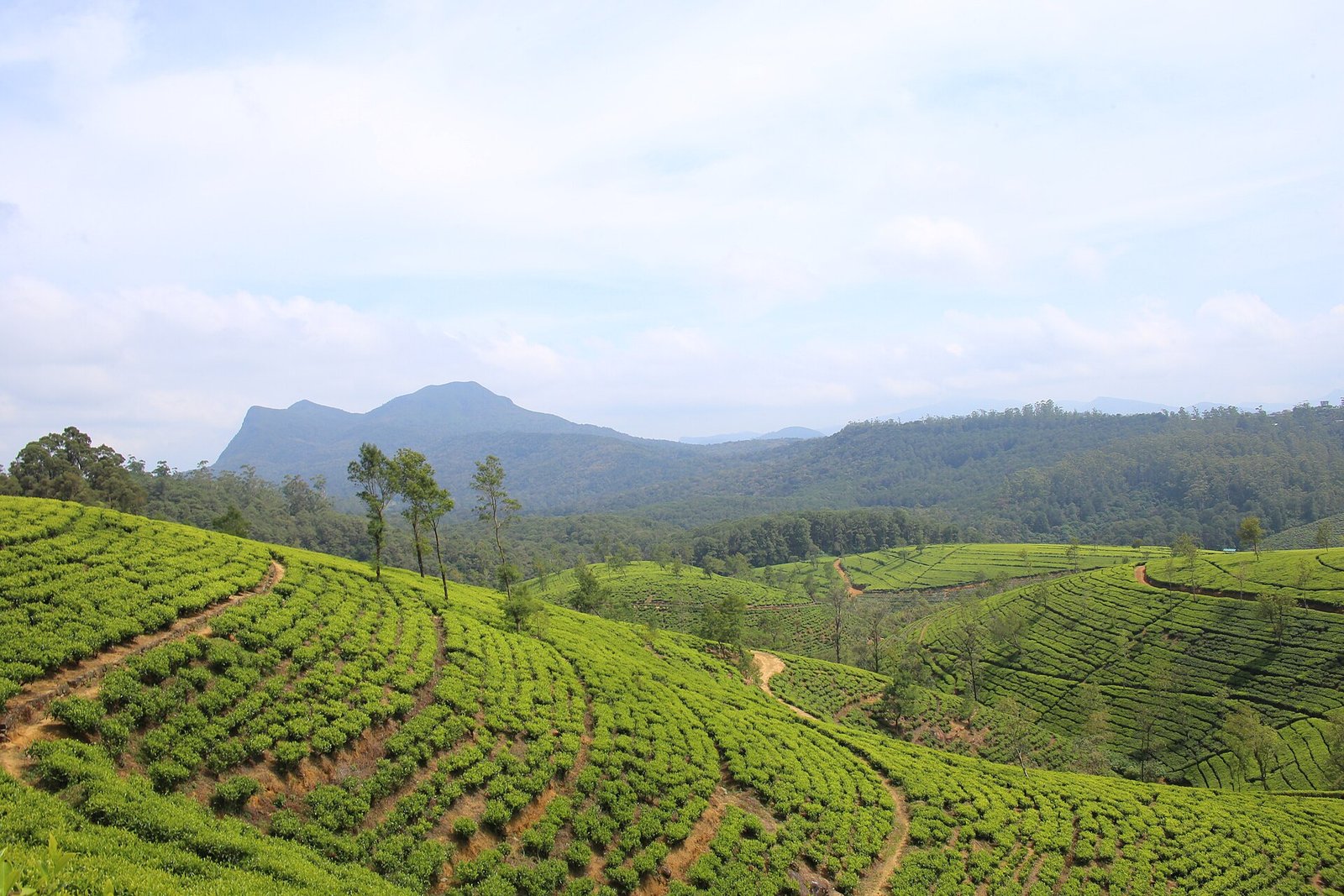
This is the big climb and the prettiest, hardest drive. Three hours of the road folding back on itself through tea country. This is the day to break at Ramboda for the Hanuman temple and lunch (at the temple itself). You reach Nuwara Eliya by mid afternoon, into cold you were not ready for. Rest. Do not schedule a temple for that evening. Let them adjust to the altitude and the chill.
Day 3, the Sita cluster.
The heart of it. Seetha Amman, the ashok vatika ground, Hakgala garden, Gayathri Peedam, and Divurumpola. Do not do all of them in one manic sweep. Two in the morning, a long sit-down lunch, one or two after a rest. This is the day the trip is for. Give it room.
Day 4, back down.
Out of the hills toward Colombo or the airport, with the last easy stops on the way. Everyone tired in the good way. You fly out with your parents having stood, feet on the floor, on the ground from the story.
You can do it in three nights if you must. You should not. The whole point of travelling with old people is that the slack is not wasted time. The slack is the trip.
The stops that work for old legs
Now the sites. For each one i will give you the story, because the story is why your parents came, and then the honest access note, because the access is why some of them will or will not manage it. Maps linked so you can hand the pin straight to your driver.
1/ Kelaniya Raja Maha Vihara, near Colombo
_(5440490106).jpg)
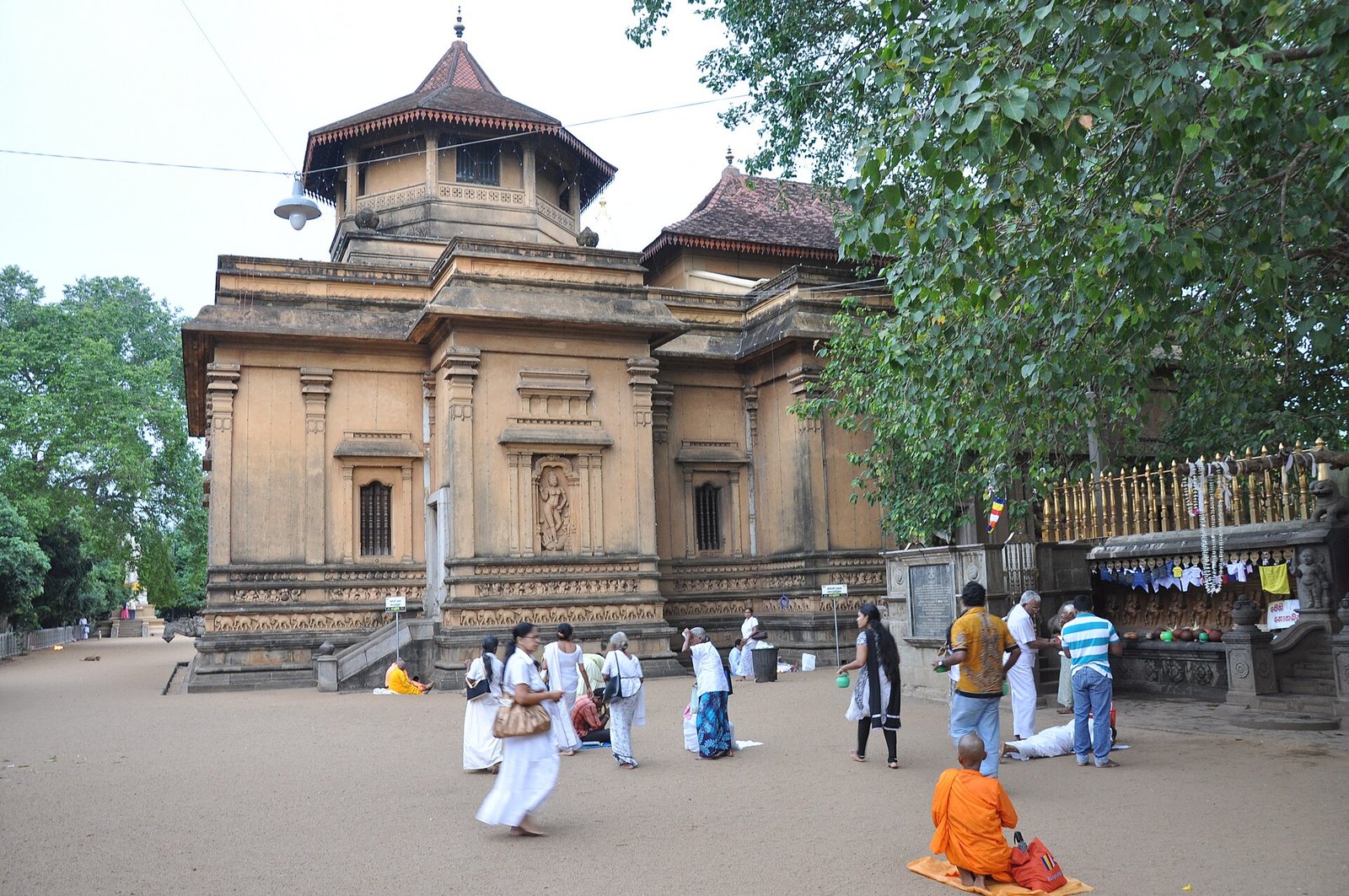
Start or end here, because it sits on the airport side of Colombo and folds into the first or last day. (Kelaniya on the map.)
The story. When the war is over and Ravana is dead, it is his brother Vibhishana who is crowned king of Lanka. Vibhishana had crossed over to Rama’s side, and depending on which uncle is telling it at which family lunch, he is either the righteous one or the brother who switched teams. Kelaniya is tied to his coronation. The painted walls inside carry Buddhist stories too, because it is a living Buddhist temple, but for a Ramayana trip it is the quiet last chapter. The good brother, the throne, the peace after all that blood.
The access.
A big flat courtyard, a few steps (about 50) at the shrine, shoes off at the door. Thirty, forty minutes at a slow wander. Clean, calm, used to visitors. A gentle first taste of what shoes-off temple-going in Sri Lanka feels like, before you get to the harder hill stops.
2/ Bhaktha Hanuman temple, Ramboda, on the Kandy road
This one earns its spot by geography as much as by story. It sits on the long climb from Kandy to Nuwara Eliya, run by the Chinmaya Mission, with a sixteen foot Hanuman cut in granite and tea slopes dropping away on every side. (Ramboda Hanuman on the map.)
The story.
This is Hanuman country. The hills where he is said to have searched for Sita, the giant leap over the water, the burning tail, all of it lives in this stretch. The temple is newer and calm and the setting does most of the work: you are high up, tea in every direction, mist coming and going across the slopes.
The access.
Middling, and worth knowing before you commit. There is a flight of steps up to the shrine (about 60 again). Take it slow, there are places to sit, and the reward at the top is the view!
Ensure you have lunch at the temple. At 500 LKR per head and what great food! Which you should, because it turns this into your lunch stop and breaks the three hour drive at the right place. Time it for the middle of Day 2.
3/ Seetha Amman temple and the Ashok Vatika, Sita Eliya
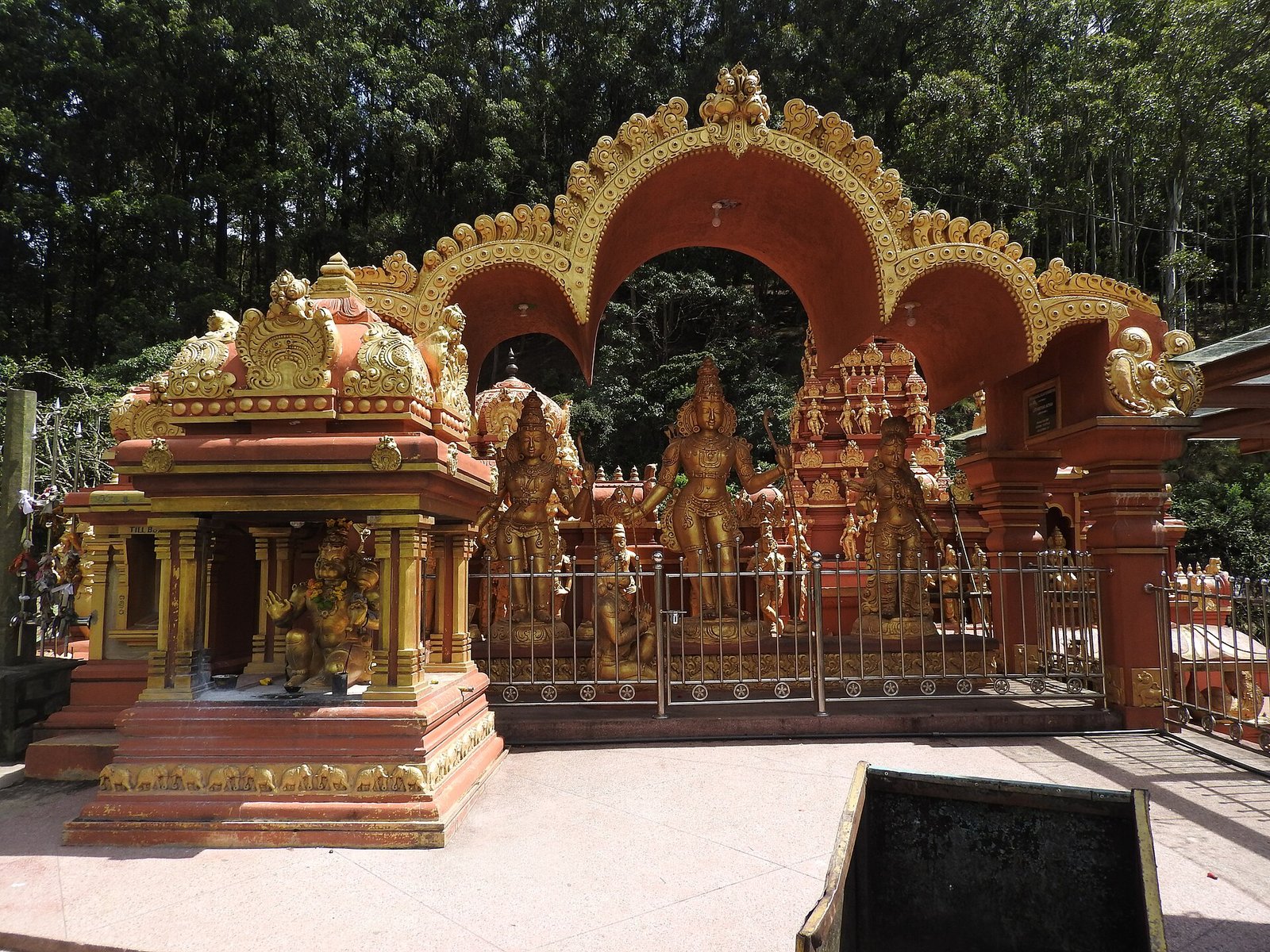

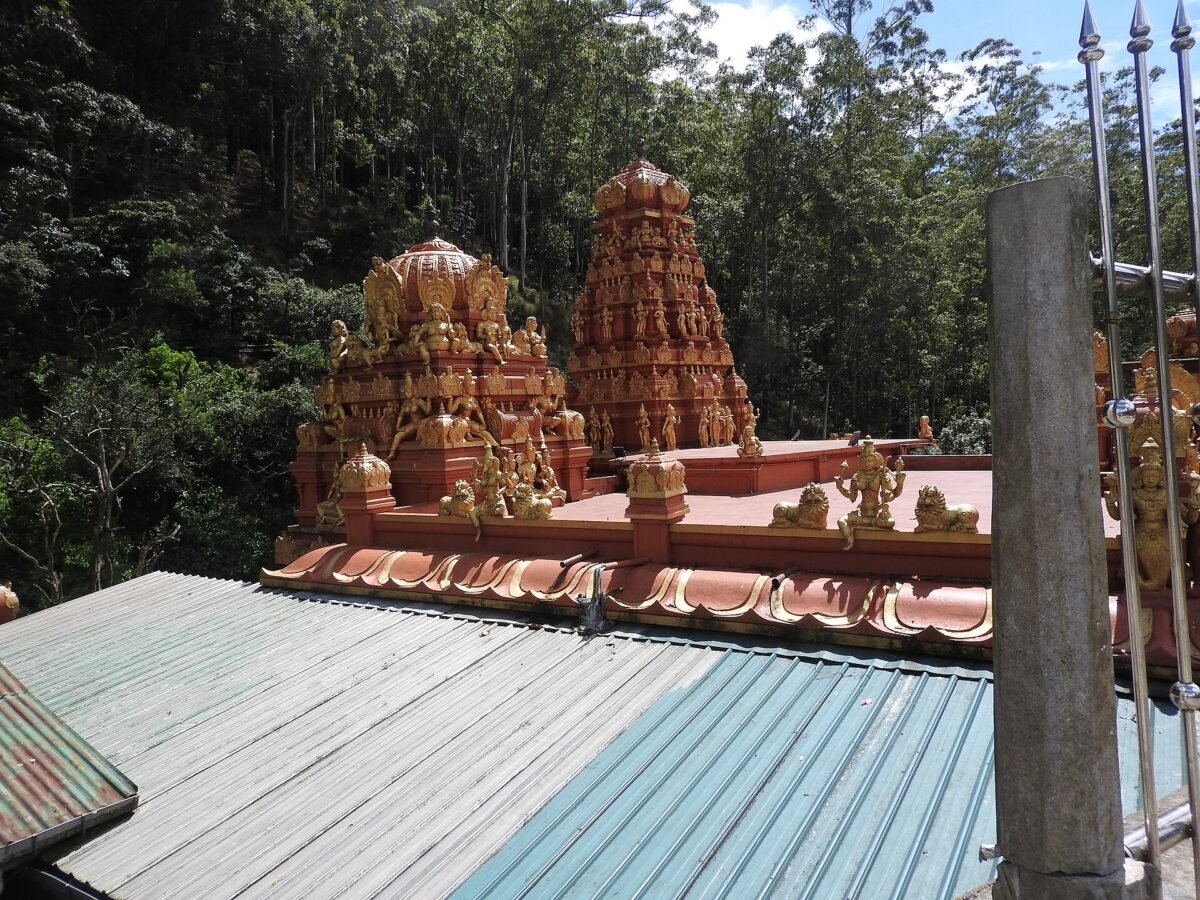
The heart of the whole trail, and the reason old parents go quiet and blame it on the cold. (Seetha Amman on the map.)
The story.
Seetha Amman is the one temple on the island given over to Sita herself. The ground around it is held to be the ashok vatika, the grove where Ravana kept her all those months, under guard, refusing him, waiting. A stream runs past where she is said to have bathed. On the rocks across the water people point out round marks and call them Hanuman’s footprints, from when he came and found her and told her Rama was on his way. Inside sit the idols. Rama, Sita, Lakshman, Hanuman. Your parents will stand in front of these longer than anywhere else on the trip. Let them.
The access.
Gentle, with one trap.
The temple is right off the road and the walk to it is short and flat. The trap is the stream and the boulders. Do not send old knees scrambling down and across to see the footprints up close. It is slippery, uneven, and there is nothing down there the eye cannot get from the top. Look from above. The temple is the thing, not the rocks.
4/ Hakgala Botanical Garden
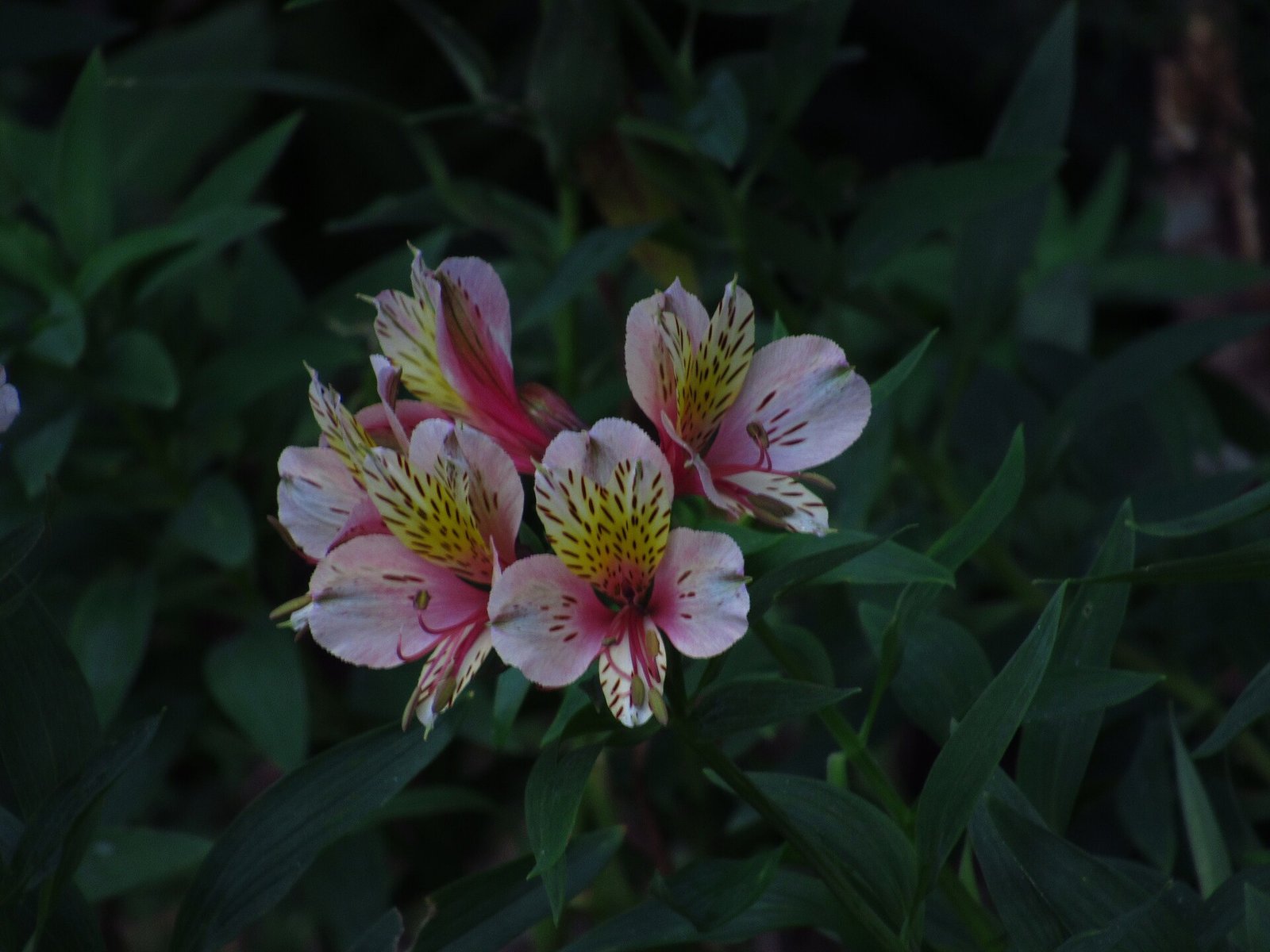

A kilometre from Seetha Amman, on the slopes of Hakgala, sits a botanical garden that local telling also folds into the ashok vatika story. (Hakgala Garden on the map.)
The story.
Same grove, wider frame. Some tellings put the place Sita was held right here on these hillsides. Whether you buy the geography or not, it is a cool, quiet, colonial-era garden, and it gives your parents a green, non-temple hour in the middle of a templey trip.
The access.
Manageable if you are sensible about it. The lower garden is flat, broad, and one of the calmest walks of the trip. The upper garden climbs, and you skip the upper garden. Stay low, sit on the lawns, let them breathe the cold clean air. The reserve forest above is closed to the public anyway, so nobody has to feel they left a harder walk undone. Tickets ran us about LKR 3500 per head for non Lankans.
You can even rent a Golf Cart for about 1000 LKR.
5/ Gayathri Peedam, Nuwara Eliya town
In the town itself, so no drive and no climb, which makes it the right stop for a tired afternoon between the outdoor ones. (Gayathri Peedam on the map.)
The story.
This is the darker corner of the epic. Gayathri Peedam is tied to Meghanath, Ravana’s son, also called Indrajit, the one who almost turned the war. He is said to have done his penance to Shiva here, earned his boons, and carried them into battle against Rama’s army. A working Hindu temple, warm priests, an indoor calm. There is something in standing for a minute in the villain’s son’s corner of the story, the part the circuits rush past.
The access is about 80 steps.
Indoor, seated, warm, in town.
6/ Divurumpola, the place of the oath
The quietest stop, and for a lot of parents the one that lands hardest. It sits a little out of Nuwara Eliya toward Welimada. (Divurumpola on the map.)
The story.
Divurumpola means place of oath in Sinhala. This is held to be where Sita walked through fire, the agni pariksha, to end every last doubt about where she had been and with whom. She came through it. It is a Buddhist temple now, flat, with a small stupa and painted panels running the trial along the wall. Here is the detail your parents will love. An oath sworn at Divurumpola is still treated as binding in local custom, real enough that disputes have been settled on this spot. Tell them that as they stand in front of the fire panels. Watch them stay a while longer.
The access.
Kind. Flat ground, a short calm walk, benches, shade. The gentlest of the hill stops, and a fitting one to close the Sita cluster on.
The one to skip, and why that is not a defeat: Sigiriya
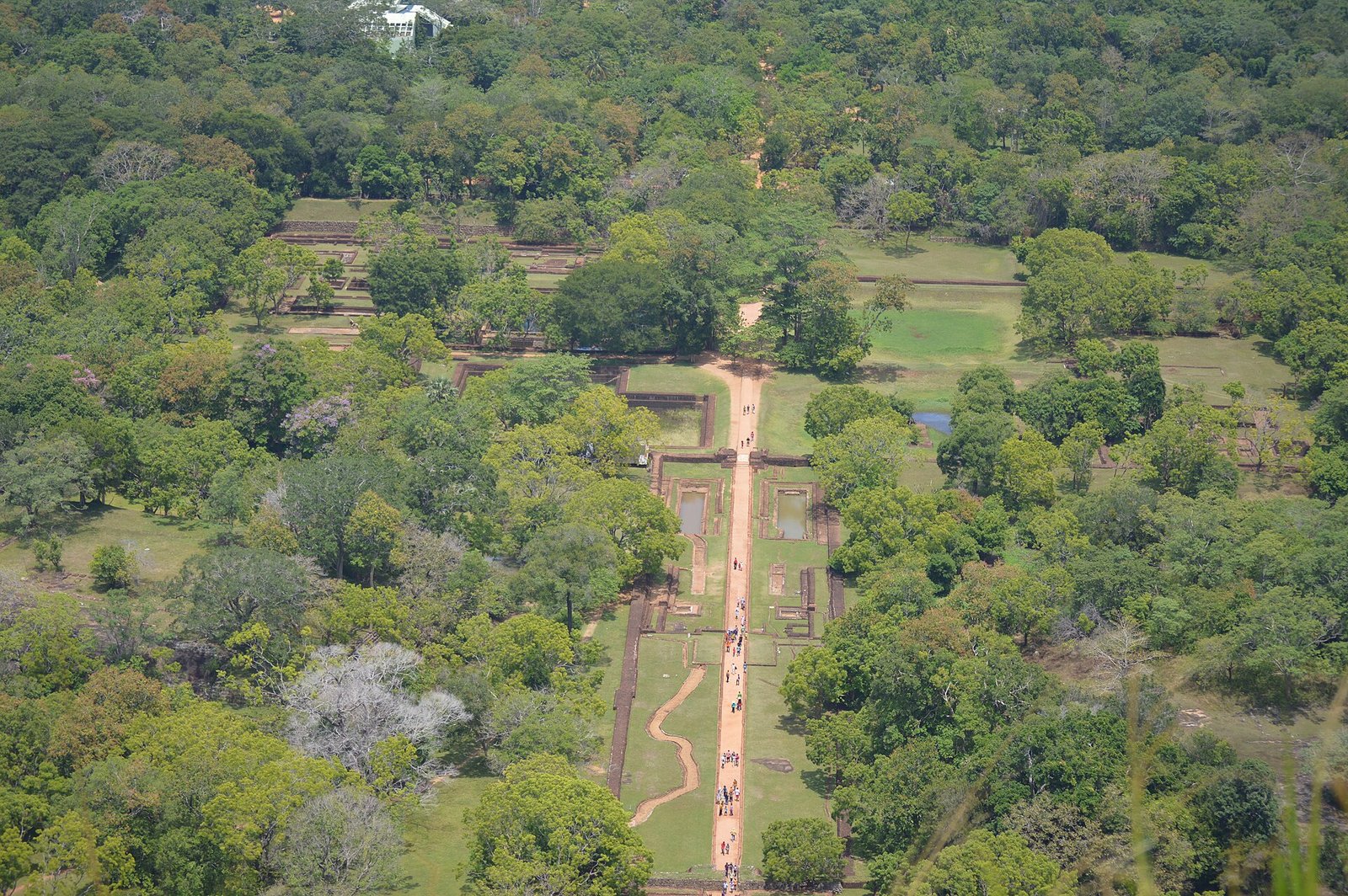

Let me come back to that rock. Sigiriya. The lion rock, the fifth century sky palace, the single most photographed thing in Sri Lanka. (Sigiriya on the map, if you are stubborn.)
It is about twelve hundred steps to the top. A steep metal spiral staircase clamped to the rock face, open to the sun, two and a half hours up and down at a sane pace, and there is no lift, no chair, no way to the summit that is not those steps. Travellers in their seventies do make it, slow, with a lot of rests, and they are proud of it and they should be. But most old parents will not, and building a whole day around whether they can is a mistake.
Here is the freeing part. Sigiriya’s link to the Ramayana is thin. Some tellings tie the rock to Ravana, some do not, and it is an ancient king’s fortress that got adopted into the trail because it is spectacular and it is on the way north. So skipping the climb costs you almost nothing on a Sita pilgrimage. If someone in the group wants a taste, they can go up to the Lion’s Feet, the wide terrace about halfway, sit under the giant carved paws, take the view, and come back down. A fair compromise, and a far shorter one. Do not put the summit on an old person’s day. That is the whole lesson of this post in one rock.
The cold and the altitude
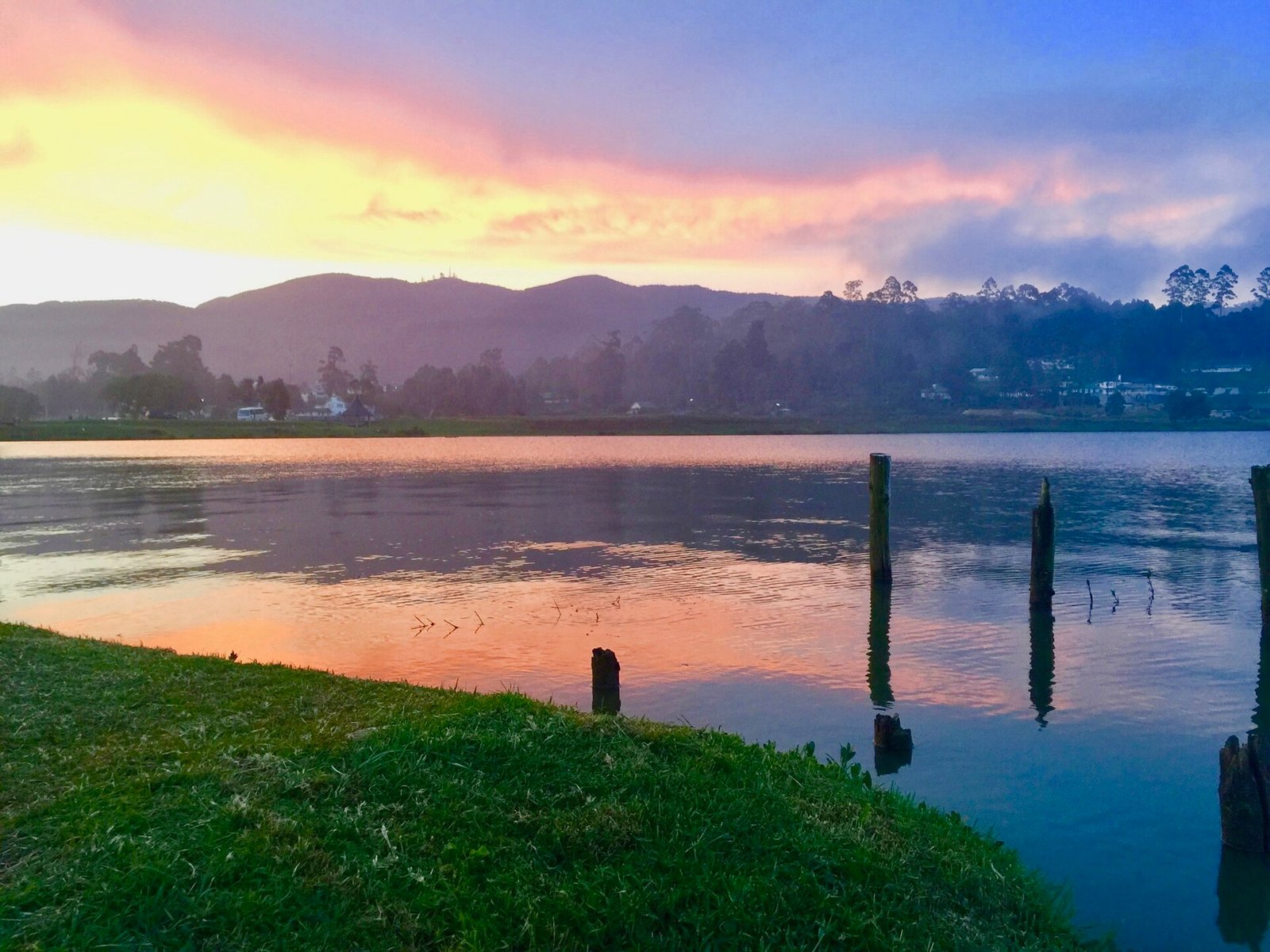

Back to that number. One thousand eight hundred and sixty eight metres. Nuwara Eliya is proper hill-station altitude, as high as many of the hill stations you have taken your parents to in India, and colder at night than you will expect. Nobody tells you, because everyone sells Sri Lanka as a beach.
What the altitude means in practice. The days are mild, sixteen to twenty two degrees, sweater weather. The nights fall to ten, and in the coldest months, January and February, they drop close to freezing. Old people feel that first and feel it hardest. Add the barefoot bit, because every temple is shoes-off and the stone floors are cold enough to ache, and you have a real, small, avoidable risk to old joints and old chests.
So. One. pack one more warm layer than anyone thinks they need. A proper sweater, a shawl, socks that come off easy at temple doors. Two. keep the heart and blood pressure medicines in the day bag in the car, not in the suitcase in the boot of a car three switchbacks behind you. Three. the Kandy to Nuwara road turns for three hours and it makes people carsick who are never carsick. Front seat for the weak stomach, windows cracked, ginger sweets in the door pocket, and break the drive at Ramboda. Real altitude sickness is rare this low, so do not lose sleep over that. It is the cold, the barefoot stone and the winding road that get old people, and all three are beaten by a shawl, a pill bag and a slow driver.
The unglamorous stuff that decides the trip
Nobody writes this part, so i will.
When you travel with old parents, the trip is not made or broken by the temples. It is made or broken by shoes, toilets, food and rest. Get these four right and the rest is a bonus.
Shoes.
Every temple is shoes-off, often onto cold or hot stone. Slip-ons, not laces. Nobody past seventy should be bending to tie and untie at five temple doors a day. Carry a pair of thick socks each so the stone does not shock the feet. Hand a coin to the chappal-minder and move on.
Toilets.
This is the real itinerary, i am not joking. Old bladders do not negotiate with mountain roads. The rule that saved us: everyone goes before we leave the hotel, and again at every clean toilet we pass, whether or not anyone thinks they need to, because the next clean one might be two hours of switchbacks away. A good driver knows where they are. Ask him. This one habit removes half the stress of the day.
Food.
Sri Lankan food is rice and curry and it is wonderful, but it can run hot and coconutty for a stomach used to home cooking. Tell the hotels and the driver straight that your parents want mild, simple, less chilli. Most kitchens oblige without a fuss. Curd, fruit and plain rice are everywhere. Keep biscuits and their own tea in the car for the long stretches. A warm cup at a cold viewpoint does more for old morale than any monument.
Rest.
Two or three stops a day. A real sit-down lunch, not a bus sandwich. An afternoon lie-down back at the hotel. The trip is four unhurried days, not a checklist you sprint through. i keep saying it because it is the one thing every operator gets wrong and every family thanks you for later.
What to pack for old parents on this trip
Short list, learned the hard way. Pack for a hill station and a temple run at the same time, because that is what this is.
- A proper sweater each, and a shawl on top. Nuwara Eliya after dark is cold, and old people feel it first.
- Slip-on shoes, not laces. You take them off at every temple. Thick socks so the cold stone does not bite bare feet.
- The medicine bag, in the day bag, never in the checked suitcase. Heart, blood pressure, sugar, whatever they take, and a few days extra in case a day runs long.
- A small torch and a power bank. Temple corners are dark and old eyes want more light than yours.
- Ginger sweets or nausea tablets for the winding hill road. In the car door, not buried in a bag.
- Their own tea and a packet of biscuits. A warm familiar cup at a cold viewpoint fixes more moods than any monument.
- A folding umbrella. The hills catch a shower most afternoons and it doubles as a walking prop on a slope.
- Cash in small notes for the shoe-minders, the tips and the coconuts.
Nothing heavy, nothing clever. The trip rewards the person who thought about socks, not the person who packed a drone.
What the whole thing cost
Real numbers, for the group, rough, from mid 2026. Sri Lankan rupees unless i mark INR, and the rate sat near one Sri Lankan rupee to a little under a third of ours when we went, so treat the conversions as a ballpark, because it moves.
- Car and driver, the full four-day loop: 90,000 LKR, about ₹30,000.
- Hotel in Colombo: 40,000 LKR, about ₹11,500.
- Hotel in Kandy: 14,000 LKR, about ₹4,000.
- Hotel in Nuwara Eliya: 25,000 LKR, about ₹7,200.
- Kandy cultural show: 3,000 LKR.
- Hakgala garden tickets: 3,000 LKR.
- Tips across the trip: 15,000 LKR.
- Flights, India to Colombo and back: ₹150,000.
- Food across the whole trip: 50,000 LKR.
Add it up and the trip came to somewhere around ₹2.3 lakh for the group. We did a lavish one to be honest.
The flights are the big lever by a mile, they swing hard with season and city, so book early and stay flexible on dates. The ground cost inside Sri Lanka, car plus three hotels plus entries, was about ₹48,000. For four days with a private car at the door and two parents kept comfortable, that is cheap, and i would pay it again without blinking.
What I got wrong
Two things, so you do not repeat them.
One.
I built the first plan around Sigiriya. It took me a full day of staring at the itinerary to admit that a twelve hundred step climb has no business in a trip for people whose knees are done. i cut it and the trip got better the same afternoon. Plan theirs, not the brochure’s.
Two.
I packed for a beach and summers. Sri Lanka lives in my head as sand and sun, and i carried that idea up to nineteen hundred metres, where it is a sweater and then a second sweater after dark. My parents felt it before i did. Pack for a hill station, because that is what the Ramayana trail becomes once you climb into it.
Neither was fatal. Both were avoidable, if only someone had told me first. Now someone has.
Ramayana trail Sri Lanka for old parents: the quick questions
Is the Ramayana trail doable for senior citizens?
Most of it, yes. Seetha Amman, the Ashok Vatika ground, Hakgala’s lower garden, Gayathri Peedam, Divurumpola and Kelaniya are short walks on flat ground. Skip the Sigiriya climb and the stream boulders at Sita Eliya and the trail is comfortable for old parents.
How many days do you need?
Four nights is comfortable. Colombo one, Kandy one, Nuwara Eliya two. Three works if you rush, and you should not rush old people.
Can old people climb Sigiriya?
It is about twelve hundred steep steps with no lift. Some seniors do it slow. Most will not, and its Ramayana link is thin, so skipping it costs you nothing. Stop at the Lion’s Feet halfway if you want a taste.
What is the best time to go?
For the hill country, the drier months from January to April. February is driest. April is lovely and busy for the Sinhala and Tamil New Year, so book ahead. Pack warm whenever you go, the nights are cold.
Do Indians need a visa for Sri Lanka?
Indians need an ETA. It has been free in some windows and paid in others. Check the official Sri Lanka ETA portal before you book, because the rule changes.
Is the trail only for Hindus?
No. The sites sit inside Hindu and Buddhist temples and one botanical garden. Divurumpola is a Buddhist temple. You come for the story and the place. Your parents supply the meaning.
How much does the Ramayana trail cost from India?
We spent about ₹2.3 lakh for the group across four days, flights included. The ground cost inside Sri Lanka, private car plus three hotels plus entries, was about ₹48,000. Flights are the swing factor.
That is the trail, ladies and gents. Not the coach-and-forty version. The version that gets two old people to the places they watched on a flickering TV forty years ago, with their knees intact, the meds in the right bag, and a shawl each against the hill cold.
If you are planning it for your own parents and you want the exact hotels, the driver’s number, or a second opinion on your itinerary, mail me on sg@c4e.in. i will send you what worked. And if you have done this yourself, tell me what i missed, because i am sure i missed something.
Over and out.