TL;DR. If you are a young entrepreneur in your 20s, here is what I wish someone had told me at 23. Ten things. Half of it is borrowed wisdom from people I trust — Naval Ravikant, Jeff Bezos, Paul Graham, MS Dhoni, Nithin Kamath and others. Half of it is mistakes I have made and would undo if I could. Skim the list. Read whichever section punches you in the gut. Then write to me and tell me what I got wrong.
- Ready. Fire. Aim. — ship before you are ready.
- Don’t rent your time. — build equity, not a salary. Even Pushpa did it 😀
- Find experiences. Chase rejections. — go where the doors are closed. They often open if you ask.
- Think beyond yourself. — let the work be the thing.
- Long-term games. Long-term people. — compounding works on friendships too. Thank you, Naval 🙂
- Stand on the shoulders of giants. — find mentors, be a shoulder.
- Sar jhukao aur kaam kar. — head down. Do the work.
- Build in public. — let strangers find you.
- Don’t play for fame. — fame is at best a tool, not a destination.
- Be the hero of your own story. — or you’ll be a side character in someone else’s.
A couple of friends met me earlier this week and threw a challenge at me. They said I should explore becoming a content creator. My honest pushback was — what would I even talk about? I dont know enough.
So I asked them to throw a prompt at me. They did.
The prompt: 10 things every young entrepreneur must do.
Here is my listicle. As I said — half of it is borrowed wisdom from people I respect. Naval shows up twice. Half of it is mistakes I have made and would undo if I could. If you disagree with any of this, please write in. I would love to find the gaps.
Lemme just go.
1. Ready. Fire. Aim. (Ship before you are ready.)

This one is from Silicon Valley parlance — if your first version isnt embarrassing, you shipped too late.
I have lived by it, almost to a fault. Every time I get an idea, I buy a domain, throw up a homepage, and then wait for execution to catch up. My GoDaddy account is a monument to this principle. There are some 80 domain names there. Including shipshit.in.
In a world where Claude, ChatGPT, and Gemini (Gemini is free, by the way) can take you from idea to working v0 in an afternoon — what exactly are you waiting for? Nobody is going to give you permission. Just go.
Who lives by this principle? Well….
- Reid Hoffman, LinkedIn cofounder, said it cleaner than I can — “If you are not embarrassed by the first version of your product, you’ve launched too late.” That single line is the entire ethos of the Valley.
- Mark Zuckerberg shipped Facebook from a Harvard dorm in February 2004. The first version did almost nothing — upload a photo, write a profile, poke a stranger. It worked.
- Brian Chesky and friends launched Airbnb in 2007 with three air mattresses in their San Francisco apartment. The first version was literally called AirBedAndBreakfast.com. Nobody asked them to ship it. They just did.
- Nithin Kamath started Zerodha in 2010 with a single-page website and a small office in Bangalore. No funding. No fancy app. No marketing. He opened for business. Zerodha is now India’s largest broker.
The lesson is annoyingly simple. Shipping a bad v1 beats polishing a v0 that never launches.
2. Don’t rent your time. (Build equity, not a salary.)

The trap that most smart young people fall into is the high-paying job. Eight to ten hours in someone elses building, at the mercy of someone elses boss, HR, and manager. Nothing wrong with the money. The trap is more subtle.
Time is the only thing in short supply. We get seventy, eighty, maybe ninety years if we are lucky. When you are eighty, do you want fifty of those years to add up to “I clocked in on time, every day”? Maybe you do. Most people I have met who chose that path don’t, in retrospect.
The point is, avoid the mistake of fooling yourself in saying that you will build a company alongside a naukri.
Who has said this better:
- Naval Ravikant — “You’re not going to get rich renting out your time. You must own equity — a piece of a business — to gain your financial freedom.” His How to Get Rich thread is the cleanest treatment of this idea anywhere on the internet. Read it start to finish.
- Warren Buffett — “If you don’t find a way to make money while you sleep, you will work until you die.” He bought Berkshire Hathaway in 1965. He still owns it. The compounding did the rest.
- MrBeast (Jimmy Donaldson) reinvests almost every dollar he earns back into his next video. He has said publicly that he does not take a traditional salary. He owns the channel, the IP, and the upside.
The lesson is simple. Trade hours for equity wherever you can. Even a 5% stake in something that works will beat a seven-figure salary over 20 years. Remember Pushpa?
3. Find experiences. Chase rejections.

Two things, but they live in the same bucket.
Find experiences means — travel if you have the money. Take on five projects in five different domains if you do not. Approach people you find interesting. Apply for jobs you have no business applying for. Cold-email the biggest founder in the country asking to intern. Hack, cold email me. Worst case — they ignore you. Most likely case — they ignore you. Best case — one rejection becomes a yes, and your life bends.
If I could undo one thing about my life, this would be high on the list. I still struggle to walk into a strangers house and be comfortable there. I cannot start a conversation with someone at the next table at Starbucks. I should fix this. I am working on it. You should not wait until you are 43 to start.
Who has done this best:
- Jia Jiang ran “100 Days of Rejection” — he deliberately got rejected every day for 100 days. The TED talk has 12 million+ views. The book Rejection Proof (2015) came out of it. He turned a fear into a brand.
- Tim Ferriss, in his 20s, cold-emailed every successful person he could find. Most ignored him. A few replied. Those few became The 4-Hour Workweek (2007) and Tools of Titans (2016) — two of the most-read business books of the last 20 years.
- MS Dhoni worked as a ticket collector at Kharagpur railway station while he chased cricket trials. He got rejected at multiple zonal selections. He kept showing up. India lifted the 2011 World Cup under his captaincy.
Rejections are statistical, not personal. Stack enough of them and the math turns.
4. Think beyond yourself.

Most of us — and I am guilty of this — act as if we are the centre of our own universe. Carl Sagan’s pale blue dot is the obvious counter, but the more practical version is this. When you chase fame, validation, attention, adulation, all of it is inward-looking. The work becomes a vehicle for the chasing.
Flip it. Let the work be the primary thing. If validation follows, great. If it does not, the work still mattered. If you are building a startup, build it because someones life gets better when you ship — not because you want to be called a “founder” at dinner parties. The funny thing is, when you actually solve a problem for a lot of people, other people line up to support you anyway.
Who embodies this:
- Jeff Bezos wrote in every Amazon shareholder letter from 1997 onwards that “it’s always Day 1” — meaning, stay obsessed with the customer, never with yourself. Amazon is now worth ~$2T.
- Yvon Chouinard, founder of Patagonia, gave away his company in September 2022. He transferred ownership to a trust whose sole purpose is fighting climate change. The work was always the point, not the wealth.
- Tony Hsieh built Zappos around the slogan “Delivering Happiness.” He sold it to Amazon for $1.2B in 2009 and kept his original salary of $36,000. I wish he dint go so soon 🙁
When you solve a real problem for real people, the personal upside takes care of itself.
5. Long-term games. Long-term people.

Lifted wholesale from Naval. Even at 25 — try to find people you can be friends with for the next 20 years.
Compounding is real. They call it the eighth wonder of the world for a reason. At 43, I can tell you exactly which relationships I let lapse and which jobs I left a year too early. I cannot tell you what those one-year hikes added up to.
If you are 23, build relationships you intend to maintain at 53. And — this is the bit people miss — go do whatever it takes to maintain them. Do not wait for the other person to call first.
Who has played this game best:
- Warren Buffett and Charlie Munger — 60+ year business and intellectual partnership. Munger passed away in 2023 at 99. Buffett said his loss was “like losing a brother.” That is what 60 years looks like.
- Bill Gates and Paul Allen — high school friends in Seattle. Founded Microsoft together in 1975. Decades of partnership before Allen left the company.
Compound interest works on friendships and reputations too. But only if you put in the work over decades, not weeks.
6. Stand on the shoulders of giants.

I have lived a large part of my life by this idea. Whatever I am standing on right now is built on the shoulders of my parents, teachers, bosses, colleagues, and a long list of people I owe.
The two-part instruction request for you.
Find mentors who will anchor you for the next 20 years (long-term games, long-term people). And, at the same time, be the shoulder for someone else. If you are 20, find someone your age and commit to being their shoulder for the next 20 years. Or find someone five years younger than you and commit to being their shoulder for the next 30.
What this does is unglamorous but priceless. When you start chasing vanity, your mentor will tell you. When you are about to take a fat salary at the wrong place, your mentor will tell you. When you stop playing the long game, your mentor will tell you. And the act of mentoring younger people forces you to think harder than you would have on your own — because the questions they ask are the questions you stopped asking yourself.
Where this comes from:
- The phrase is most probably from Isaac Newton (1675) — “If I have seen further it is by standing on the shoulders of giants.” Newton was talking about scientific work. The principle applies to careers, businesses, and lives just as well.
- Nikhil Kamath runs WTF, a podcast that brings senior operators in conversation with younger founders. He has openly said his goal is to be a shoulder for the next generation, not a guru.
Pick a mentor. Become a mentor. Both, at the same time, no matter how old you are. The two roles teach each other.
7. Sar jhukao aur kaam karo
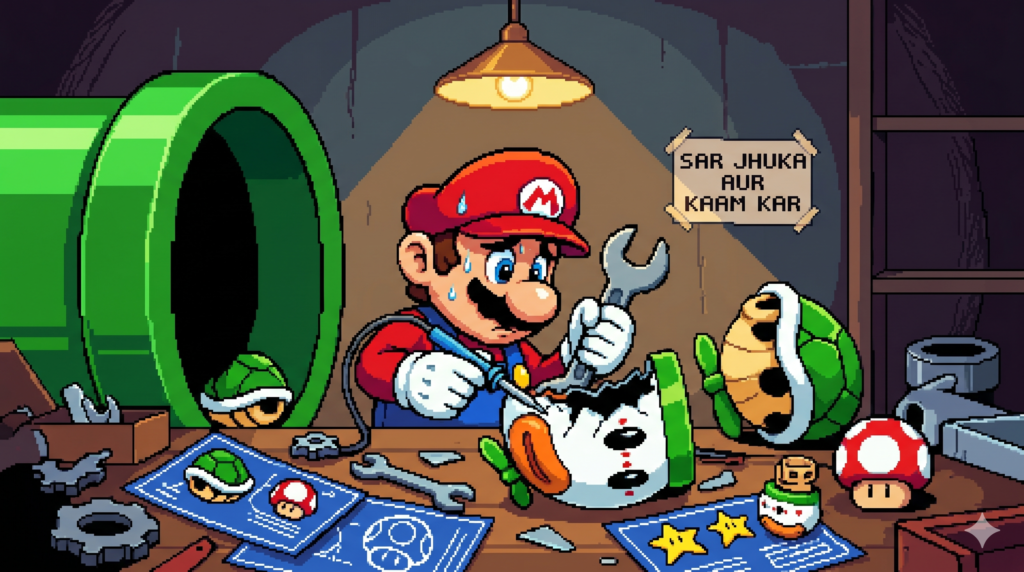
I saw this on someones WhatsApp status and it stayed with me. Sar jhukao aur kaam karo. Head down. Do the work.
My pet peeve: people at Starbucks who are “working” but actually spend the whole time looking at other tables, talking to strangers, getting up for the third refill. Starbucks is a workplace. If you treated those three hours like work, you would have shipped twice already.
Who treats the work like the work:
- Jeff Bezos worked 80-100 hour weeks in the first decade of Amazon (1994-2004). He has said publicly he didnt take a single full weekend off in those years.
- Elon Musk famously slept on the Tesla factory floor during the 2018 Model 3 production ramp. Whatever you think of him otherwise — that is what sar jhuka aur kaam kar looks like in practice.
- Jensen Huang, the NVIDIA CEO, has said in multiple interviews that he works “every day from when I wake up to when I go to sleep, including weekends.” NVIDIA is now a $3T+ company.
Actual work, not the appearance of work, is the only input that compounds.
8. Build in public.
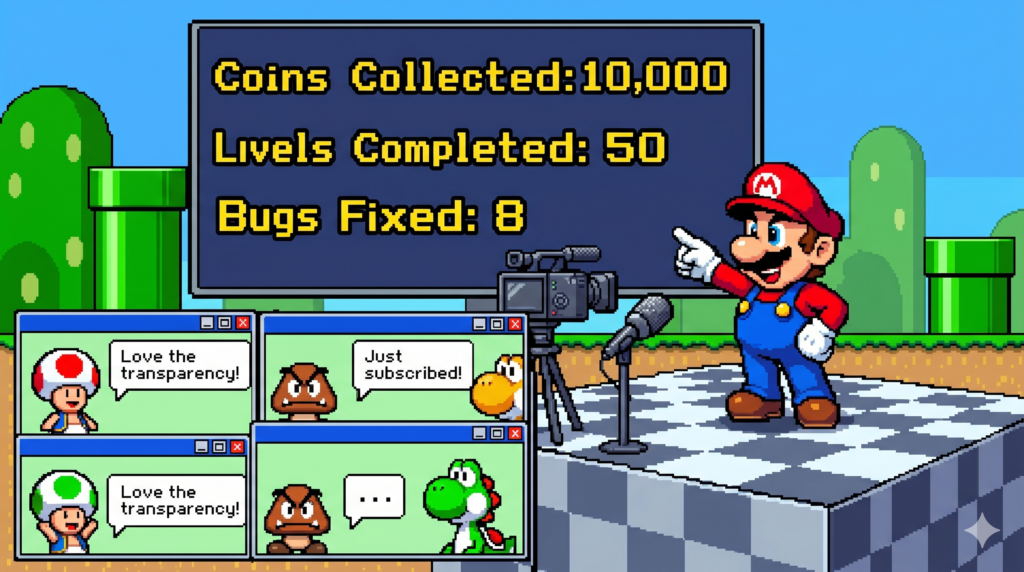
In my generation, building in public meant writing a blog. Today it means making videos, posting on LinkedIn, shitposting on Twitter. The medium will change again. The principle will not.
The reason it works — people you do not know, who do not know you exist, surface and offer help you did not ask for. Inputs, intros, opportunities. Every single person I have watched build in public — without exception — has found more options than they would have otherwise.
Caveat: build-in-public is the single most over-said piece of advice on the internet right now. That does not make it wrong. It just means most people repeat it without doing it. Less repeating. More doing.
Who actually does it:
- Pieter Levels built Nomad List, Remote OK, and a dozen other products fully in public on X. He shows revenue dashboards. He shows what is breaking. He has built a $3M+ ARR portfolio as a solo founder.
- Sahil Lavingia built Gumroad in public. He has shared revenue, layoffs, mistakes, and pivots openly since 2011. The transparency is the brand.
The leverage is not the views. The leverage is the strangers who reach out because they saw what you are working on. I do a version of this with my weekly notes, every Friday. Try it for 12 weeks. The compounding shows up around week 8.
9. Don’t play for fame.
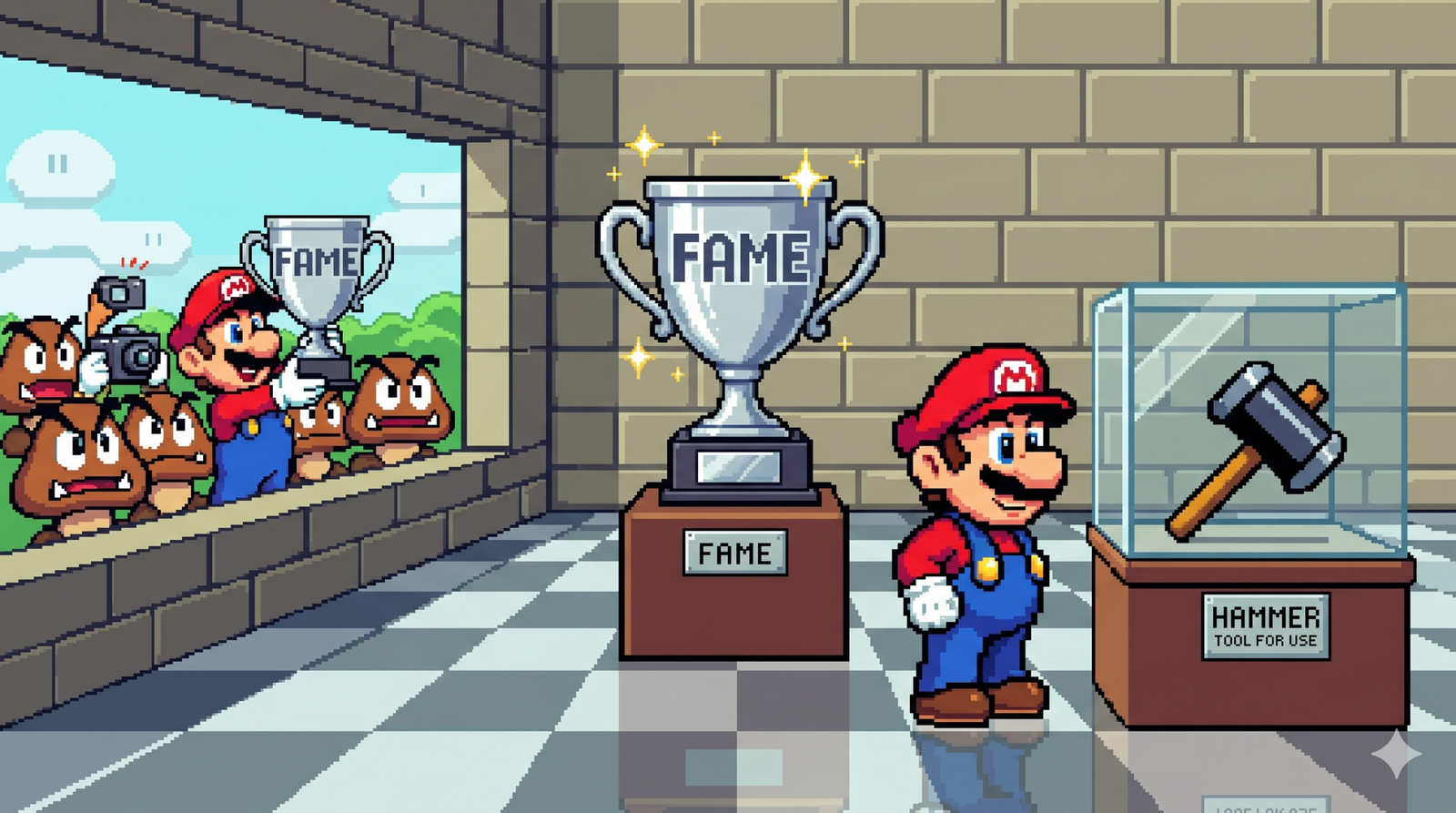
This is uncomfortable to write because I am, right now, making content to be known by more people. But the distinction matters.
Fame as a tool — for distribution, for trust, for access to opportunities — is fine. Fame as the destination is a trap. The test — if someone stripped your name and face from your work and put it out under no name at all, would you still make it? If yes, you are working on the right thing. If no, examine what you are actually chasing.
Who has lived this:
- Naval Ravikant — “Be famous for your work, not your name.” He has the most-quoted thread in tech history (How to Get Rich) and he still mostly stays off the conference circuit.
- Satoshi Nakamoto built Bitcoin under a pseudonym in 2008. Disappeared in 2011. Bitcoin’s market cap is now $1T+. The creator is unknown. The work survives.
- Banksy has made anonymous street art since the 1990s. Pieces sell for tens of millions of dollars. The art is the artist’s whole identity. There is no face.
- John and Patrick Collison — Stripe’s founders — built infrastructure that powers a huge chunk of internet commerce. Stripe is valued at ~$90B. Most of Stripe’s customers couldn’t pick the Collisons out of a lineup.
Fame collected as a side effect of useful work is durable. Fame chased directly evaporates the moment you stop performing.
10. Be the hero of your own story.
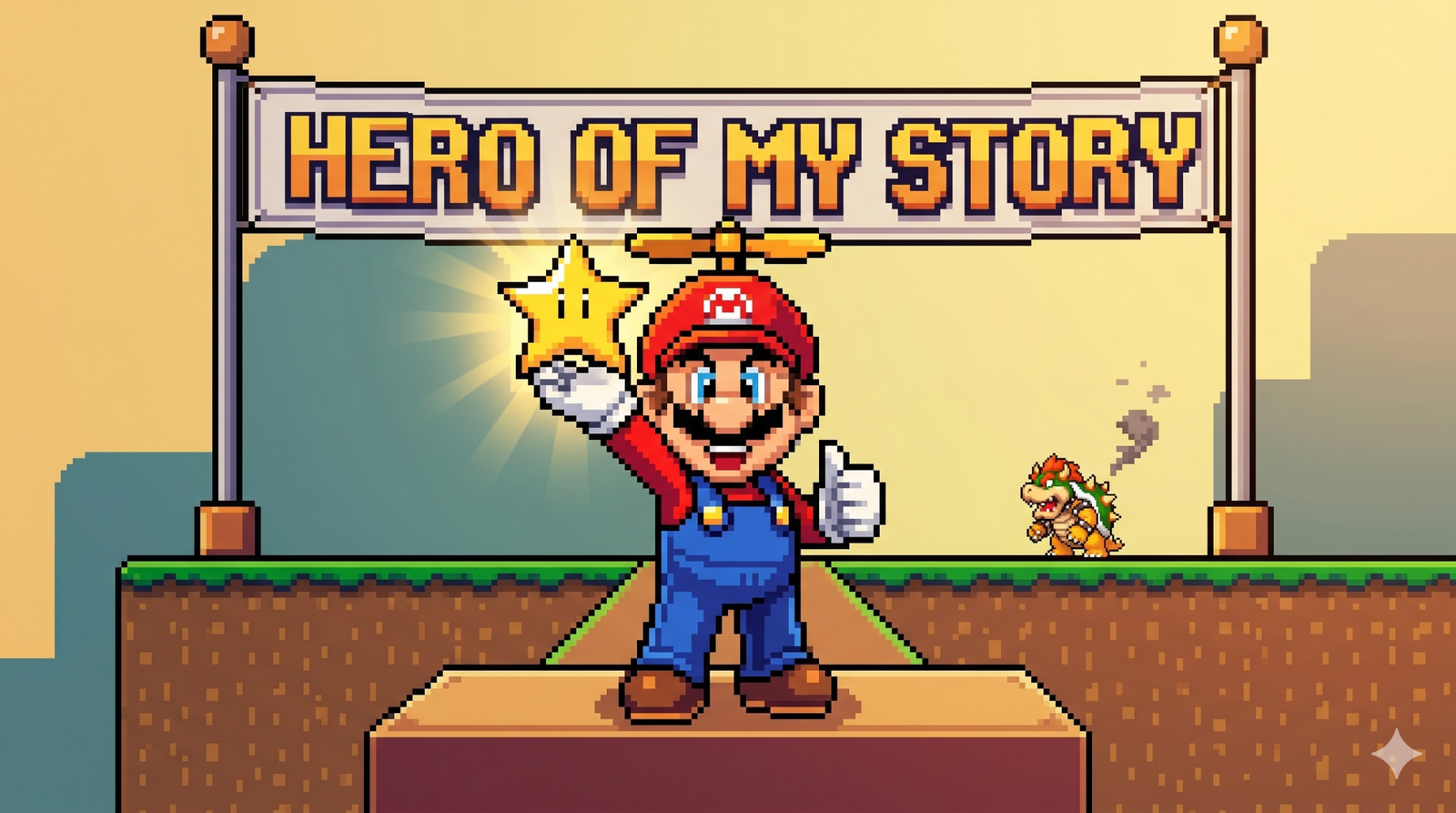
This is the biggest lesson of the last few years for me, so I am saving it for last.
For most of my life, I have been a supporting character in other peoples stories. Useful, sometimes essential, almost never the lead. The clearest test — think of your five favourite films. Name five characters you remember. You will name the heroes. You will not remember the loyal friend who shows up in three scenes and helps the lead succeed.
You have one life. Limited time. A large objective. If you do not build your story, you will build someone elses. They will pay you well. You will be useful. The story will still be theirs.
This is the one I am still learning.
Who has lived this:
- Joseph Campbell described it in The Hero with a Thousand Faces (1949) — the hero’s journey is the universal pattern. Every culture, every century, the same arc.
- Steve Jobs, in his 2005 Stanford commencement speech — “Your time is limited, so don’t waste it living someone else’s life.”
- A.R. Rahman moved from Madras to Mumbai to London to Hollywood across three decades. He composed Slumdog Millionaire‘s score on his own terms. Won two Oscars in 2009. Indian. Specific. The hero of his own story.
Your story does not have to be globally famous. It just has to be yours. Picked by you. Driven by you. Edited by you.
Frequently asked questions
What is the single most important thing a young entrepreneur should do?
Ship before you are ready. Every other principle compounds on top of having something in the world. A bad v1 in public beats a brilliant v0 in your head.
Do I need a mentor to succeed as a young entrepreneur?
Yes — and you also need to be a mentor. Both at the same time. Find someone 10 years ahead of you who anchors you. Find someone 10 years behind you who you anchor. The two-way relationship is what makes you better.
Is it bad to take a high-paying job as a young entrepreneur?
Not bad, but expensive. The opportunity cost of renting your time at 23 compounds into a different life by 43. Trade hours for equity wherever possible.
What does “build in public” actually mean?
Share your work publicly while you are doing it — on X, on LinkedIn, in newsletters, on YouTube. Not the polished output. The messy middle. The lever is the strangers who surface and offer help you didn’t ask for.
How do I find experiences as a young entrepreneur if I have no money?
You don’t need money. Take on five projects in five different domains. Cold-email people who scare you. Apply for things you have no business applying for. The currency is rejection — collect enough of them and one will turn into a yes.
Who are the best people for a young entrepreneur to follow?
Naval Ravikant for principles. Paul Graham for essays. Jeff Bezos’s shareholder letters (1997 to 2020) for customer obsession. For Indian operators — Nithin Kamath, Kunal Shah, Nikhil Kamath, Anand Mahindra. Read the ones whose work compounds. Not the ones whose follower count compounds.
Is “ready, fire, aim” the same as “move fast and break things”?
Close cousins, not identical. Ready, fire, aim is about launching before perfection. Move fast and break things is Facebook’s old engineering mantra — about iteration speed once you have launched. Use the first to start. Use the second to iterate.
If you read this far — and you disagree with anything, or you think I missed something — write to me. Email or @saurabh on X. I will read it.